PCB Functional Testing
Functional Testing for Reliable Electronic Assemblies
We ensure every board powers up, runs, and responds the way it should before it ships.

We ensure every board powers up, runs, and responds the way it should before it ships.
Functional tests examine entire printed circuit boards to verify that assemblies behave as intended in their final application.
The board is powered, key functions are exercised, and the results are checked against your requirements under realistic operating conditions.
These tests use a mix of automated equipment and software that run defined steps and capture measurements, with operators stepping in where hands-on or visual inspections are still needed.
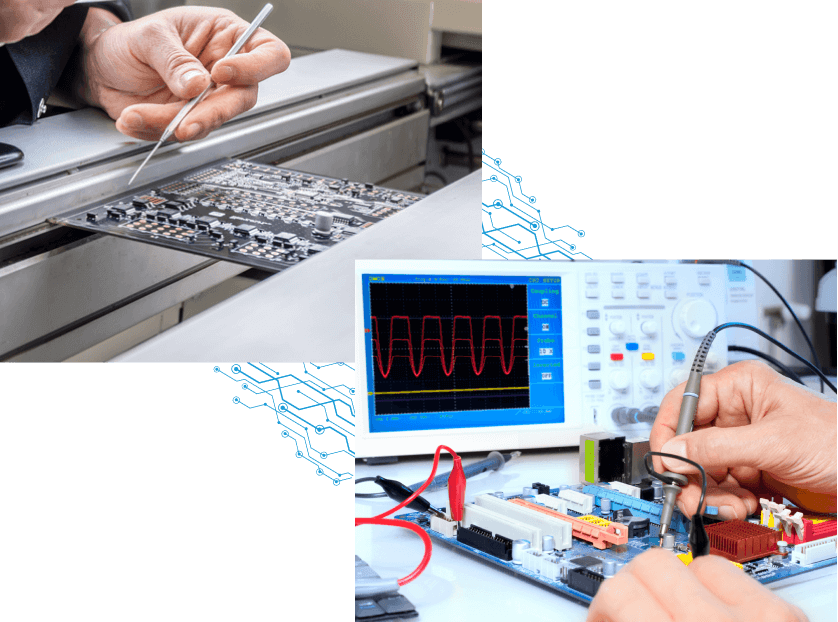
PCB assemblies are placed in customer-provided fixtures and connected to test equipment such as multimeters, load switches, and specialized jigs so the functional test can mirror the final electrical environment.
Where required, functional tests include loading and verifying firmware or software on the board, with automated software handling the test steps and measurements to reduce operator involvement.
The automated system runs the defined test sequences, applies loads, and measures responses, ensuring consistent results from board to board across different production volumes.

For tasks that cannot be fully automated, such as checking that LEDs or other indicators behave correctly, operators perform visual checks and verify performance.

After functional circuit testing, boards move into post-test 5% inspection, where conformal coating and other critical post-test elements are verified before product release.
TESTIMONIALS
RESOURCE LIBRARY
CONTACT US
PCB functional testing offers a check to ensure the complete assembly behaves like the final product. The board is powered, firmware or test software may be loaded, and defined test cases run, so you can see how the PCB’s behavior lines up with your requirements in a realistic operating environment.
Other common PCB testing methods at August focus on different stages of the build:
Every project at August uses a comprehensive suite of test methods, but not every board will see every possible test. Your test plan, product risk, and volumes determine which other tests are combined with PCB FCT testing to get the coverage you need without unnecessary cost.
PCB functional testing can exercise the board under simulated operating conditions that reflect how it will run in the field, including real loads, expected operating frequency, thermal stress, and typical duty cycle on power stages or control loops. The goal is to confirm that the assembly will function correctly when it is installed in its target system.
For more complex or high-frequency boards, the test plan can focus on the signals and timing that are most sensitive to the operating environment, so the test checks the right behaviours instead of only basic overall functionality.
Functional testing takes place near the end of the electronics manufacturing process, after the PCB assembly process and earlier inspection steps are complete. It typically follows AOI, X-ray, and in-circuit testing, and happens before final packing and shipment.
If a board fails PCB testing, it is removed from the conforming population and investigated against the agreed product specifications. Technicians and quality inspectors look for issues such as incorrect voltage, short circuits, or non-responsive components, then perform root cause analysis to understand why the board did not operate correctly.
Our thorough testing reduces human error, prevents costly repairs in the field, and feeds back into quality control, allowing the overall electronics manufacturing process to be adjusted if a systemic problem is identified.