
Outsourcing Electronics Manufacturing: A Practical Guide for OEMs
Outsourcing Electronics Manufacturing: A Practical Guide for OEMs
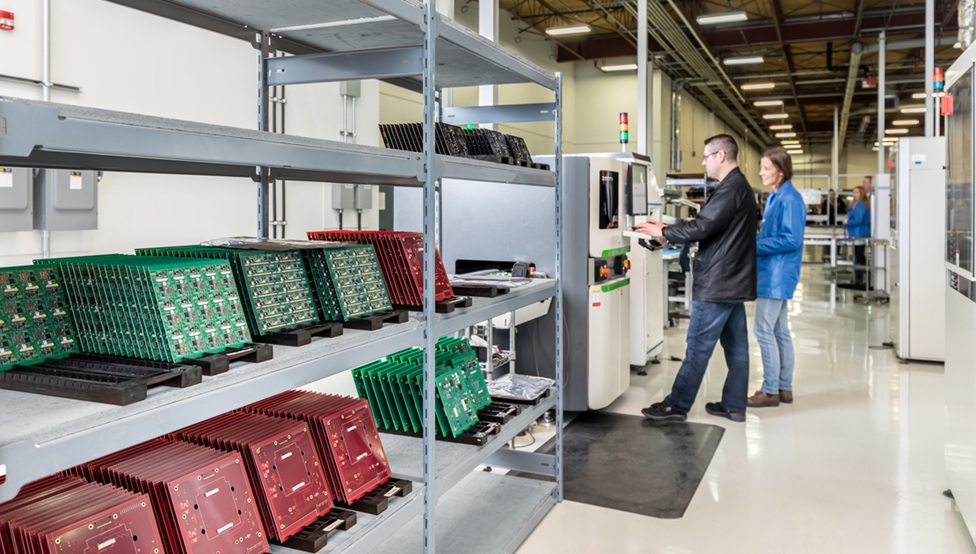
Your electronics team did the hard part. You got the product working, proved demand, and figured out how to build it in-house well enough to ship consistently. But now, production is eating your week.
One build needs a last-minute parts swap because something is backordered. Another fails for a reason nobody can explain or reproduce. Engineering is stuck troubleshooting instead of improving the next revision, and your operations team is juggling spreadsheets, suppliers, and workarounds.
Outsourcing electronics manufacturing is a way for original equipment manufacturers (OEMs) to regain control. Not by handing the job to a random factory, but by moving board and system builds to an electronics manufacturing services (EMS) partner that can source raw materials, assemble consistently, validate quality, and ship finished products while your team stays focused on the electronic device itself. This guide breaks down what outsourcing really includes, why OEMs choose onshore manufacturing, and how to evaluate options without getting burned.
What Outsourcing Electronics Manufacturing Actually Means
Outsourcing electronics manufacturing means partnering with a manufacturer to take on some or all of the work required to build your product consistently at scale. Instead of your internal team running every build step, you transfer defined responsibilities to a partner with established processes, proper electronic equipment, and proven quality controls.
For OEMs, outsourcing usually includes a mix of services based on where you want to stay hands-on:
- Procurement and sourcing support: Managing purchasing, alternatives, lead times, and availability so builds do not get replanned every week.
- PCB assembly: Building printed circuit boards at production quality with repeatable processes across runs.
- System and box build assembly: Integrating boards into enclosures, adding mechanical parts, wiring, labelling, and final assembly steps.
- Testing and inspection: Confirming boards and systems meet requirements before shipment, with coverage matched to your risk and compliance needs.
- Outbound logistics and fulfillment: Packaging, documentation, and shipping to customers, distribution, or internal locations.
- Repair, refurbishment, and sustainment: Supporting the product after launch, handling returns, and keeping electronics production lines stable as components change.
Some OEMs only outsource production of board builds. Others hand off end-to-end production from components through finished systems. The point is to achieve a consistent output without relying on your engineering team as the production safety net.
Why OEMs Outsource Electronics Manufacturing
Most OEMs do not outsource because they cannot build a product. They outsource because building it consistently starts to compete with the business’s core competencies.
Common triggers include:
Production problems interrupt engineering
When every build has a new issue, engineering becomes the default escalation path. That slows revisions, feature work, and new product development.
Growth outpaces your people and space
Early volumes can work on a bench or a small line. As orders increase, production starts depending on overtime, bottlenecked stations, and constant reprioritization.
Parts availability forces constant replanning
Backorders and long lead times can turn every run into a sourcing scramble. Under pressure, substitutions happen late and build quality changes from one batch to the next.
Repeatability becomes a challenge
A unit that works once is not the same as a unit that builds the same way every time. As volume increases, variations in process, handling, and components manifest as intermittent failures, rework, and scrap.
Customers want more than you can provide
As products mature or head into regulated or harsh environments, customer requirements often expand to include documentation, inspection results, and test evidence.
The unplanned work starts costing more than the build
Expediting, rework, extra inspections, and coordination across suppliers can rack up manufacturing costs and quietly consume the budget. Outsourcing becomes attractive when the overhead starts to outweigh the benefits of keeping everything internal.
Industries That Commonly Outsource Electronics Manufacturing
Across various industries, most companies outsource when their manufacturing needs grow beyond what makes sense to handle internally. The decision is often driven by production costs, labour costs, available expertise, and the capital expenditure required to scale, plus the other factors that shape quality and delivery. For many teams, outsourcing improves cost effectiveness and helps keep a predictable product cost.
Industrial
Industrial products often combine electronics with electromechanical assembly, rugged enclosures, and tight quality standards. Outsourcing helps teams use the right equipment and processes to deliver products reliably, even when every program has its own set of requirements.
Transportation
Transportation products often face vibration, temperature swings, and strict reliability expectations. Outsourcing helps OEMs scale production with consistent assembly and test discipline.
Agriculture
Ag-tech devices live outdoors and get treated roughly, even when they are “simple” electronically. Outsourcing supports repeatability and durability expectations without tying up internal teams on production issues.
Instrumentation
Instrumentation is often judged on accuracy and repeatability, which makes build consistency a core requirement. Outsourcing helps maintain controlled processes across low-to-mid volumes and long lifecycles.
Automotive
Automotive work tends to carry high reliability expectations and tight change control. Outsourcing supports consistent documentation, traceability, and production discipline as volumes grow.
Health & Wellness
These products can range from consumer-grade to more controlled environments, but they still need consistent performance and fit-and-finish. Outsourcing helps keep builds repeatable across frequent product updates.
Mechanical
Products with meaningful mechanical integration often fail at interfaces: tolerances, fastening, cable routing, and enclosure fit. Outsourcing helps standardize assembly steps, so mechanical variations do not lead to electrical failures.
Start-Ups
Startups usually need flexibility and guidance more than raw capacity. Outsourcing helps them move from “it works” to “it builds the same way every time” without hiring a full production team too early.
Aerospace and Defense
These programs often require strict documentation, traceability, and controlled processes, plus long-term support. Outsourcing helps maintain consistency and evidence through changing requirements and extended lifecycles.
Oil and gas
Harsh-environment builds tend to demand repeatability and traceability, with reliability driving decisions more than speed. A manufacturing partner can stabilize builds as components change and field conditions add constraints.
Internet Of Things (IoT)
Generally speaking, IoT programs tend to move fast at the beginning, then hit scaling pains when volumes ramp. Outsourcing supports repeatable builds and steadier component sourcing as designs evolve.
Medical devices
For regulated work, expectations around documentation and verification shape the program from the very beginning of the design process through manufacturing. Outsourcing can help OEMs maintain consistent processes and evidence across a company’s product portfolio, not just a single build.
Communications and networking
Networking and communications products often use PCBAs with multiple layers, tighter tolerances, and performance-sensitive layouts. Outsourcing helps maintain process consistency when sourcing changes or production ramps.
Power and renewable energy
Power electronics often bring thermal and mechanical constraints together, with long lifecycle expectations. Outsourcing can reduce variability and support consistent builds over time.
Lighting and Electrical
Lighting products often blend electronics, drivers, housings, and compliance considerations. Outsourcing supports consistent assembly and testing when SKUs multiply and demand fluctuates.
Consumer electronics
In consumer electronics, demand swings and short product cycles put pressure on speed and cost-effectively scaling output. These products often combine electronics with plastics and enclosures, including injection molding and sheet metal, where supplier coordination directly affects the final product and total product cost.
Why OEMs Choose Onshore Outsourcing
For many OEMs, onshore outsourcing means working with a manufacturing partner in the same country or region as the teams that own products. This often comes down to keeping early and mid-stage production close to engineering, supply chain, and decision-makers.
Common reasons OEMs choose an onshore partner include:
Faster iteration when the product is still changing
Early production tends to surface edge cases: tolerance stack-ups, connector fit, test coverage gaps, and part substitutions. Shorter feedback loops make it easier to resolve issues quickly and keep the build aligned to the latest revision.
Clearer communication and fewer handoffs
Time zones and distance add friction to daily coordination. Onshore manufacturing usually makes it easier to run frequent check-ins, align on priorities, and keep changes controlled without delays.
More predictable logistics during ramp and sustainment
Even small disruptions can ripple when products and parts have to travel farther. Keeping manufacturing closer to home can simplify logistics, reduce transit time risk, and make it easier to respond when demand changes or a component suddenly goes constrained.
Better fit for regulated or harsh-environment programs
When customers expect traceability, documented inspection, and test records, proximity can help with audits, evidence sharing, and faster corrective action when something drifts.
Practical control over quality during scale-up
As volume grows, consistency matters more than one perfect build. Onshore partners are often chosen when OEMs want tighter oversight during process stabilization, test development, and ongoing quality control.
Offshore manufacturing in the electronics industry can make sense when OEMs are looking for cost savings at higher volumes, want to overcome capacity constraints, or when certain components and sub-assemblies are more readily available in a specific region. The trade-off is usually more coordination across time zones, longer logistics, and more discipline around documentation and change control.
Through Kaynes, August Electronics can support offshore builds without forcing OEMs to manage multiple EMS companies directly. August remains your onshore point of contact, keeping communication, project coordination, and visibility centralized, while the appropriate sister facility supports offshore contract manufacturing when it is the right fit.
What You Can Outsource End-to-End
Outsourcing electronics manufacturing can be scoped in a few different ways, depending on how much you want to keep in-house. Most OEM programs fall into one of these models:
Board build only
You keep final assembly and shipping internal, but outsource PCB assembly and, in some cases, board-level test. This works well when your enclosure assembly is simple, or when you want to maintain tight control over final configuration.
Board build plus integration
In addition to PCB assembly, the manufacturing partner handles harnesses, sub-assemblies, enclosure integration, labelling, and final system assembly. OEMs often choose this when the electronic product is becoming too complex to assemble consistently on an internal bench or small line.
Full end-to-end production and sustainment
This includes sourcing, PCB assembly, system build, testing, packaging, and shipping. It can also extend into inventory support and repair/refurbishment. This model is common when OEMs want fewer internal touchpoints and more predictable output over time.
Rapid prototyping through production
Some OEMs want one EMS provider who can outsource rapid prototyping and manufacturing without switching vendors between early builds and production runs. This approach can reduce rework caused by changing processes, materials, or build assumptions during the transition from prototype to scale.
Regulated programs and medical devices
For teams outsourcing medical electronics manufacturing, the scope often includes stricter documentation, traceability, controlled processes, and test evidence to support compliance expectations. In these cases, outsourcing decisions tend to prioritize repeatability and quality systems alongside cost and lead time.
The right scope depends on where your internal team adds the most value. Many OEMs start with one segment, then expand the handoff as the product and volumes stabilize.
How to Evaluate an Electronics Manufacturing Partner
When you outsource your electronics manufacturing process, you are choosing how your product will be built, tested, documented, and supported over time. A solid evaluation focuses on capability, control, and fit, not just price.
Start with proven capability for your build type
Look for direct experience with the kind of work you need, whether that is high-mix builds, harsh-environment electronic assemblies, regulated documentation, or complex integration. A partner can be excellent at board assembly and still struggle with system integration, test development, or sustaining engineering.
How August supports this: August provides end-to-end electronics manufacturing services (EMS), from DFM support and procurement through PCB assembly, cable and harness work, box build, and testing. That range matters when OEMs want fewer handoffs between vendors and fewer grey areas in responsibility.
Check how they manage sourcing risk
Availability of electronic components can make or break schedules. Ask how they handle alternatives, lead time monitoring, lifecycle risk, and purchasing strategy. If your product cannot tolerate substitutions, that needs to be clear and enforceable.
How August supports this: August Electronics has strong relationships with component manufacturers, dedicated supply chain and inventory management capabilities, and supports turnkey and hybrid procurement models. That helps OEMs reduce expediting and keep builds moving when lead times shift, without losing visibility into what is being bought and why.
Review how quality is built into the process
Look beyond end-of-line checks. Ask what inspections and tests happen during the build, how issues get contained, and what the corrective action process looks like when a defect appears.
How August supports this: August supports structured inspection and electronics testing, including in-process inspection and functional testing, with quality systems aligned to ISO 9001 and ISO 13485 requirements. That fits OEMs who need disciplined documentation and controlled processes.
Evaluate communication and day-to-day ownership
This is where many contract manufacturers succeed or fail. You need clear points of contact, predictable status updates, and a defined process for changes and decisions. If you cannot tell who owns what in the first few conversations, that will not improve during a production crunch.
How August supports this: August stays as the onshore point of contact and coordinates manufacturing programs from early alignment through delivery. With Kaynes, that single point of contact can also extend to offshore legs when it is the right fit, without forcing the OEM to manage multiple vendors.
Look for a path to scale
Even if you are starting small, evaluate whether the partner can support higher volumes, additional SKUs, and future revisions. The best fit is the one that can grow with your program without forcing a supplier change right when demand increases.
How August supports this: August supports both prototype and production programs, and the Kaynes acquisition adds additional capacity options. That gives OEMs a smoother path as volumes increase, without having to rebuild their supplier ecosystem.
Where August Electronics Fits
For OEMs who want to outsource manufacturing without losing visibility or control, August Electronics provides an onshore option that can cover more of the build under one roof. That matters when you are trying to reduce coordination overhead and keep decisions moving during ramp-up.
August’s value-added services span the full production chain, including:
- DFM input to reduce avoidable issues before a build hits the floor
- Supply chain and procurement support to manage lead times, alternates, and purchasing strategy
- PCB assembly for surface mount technology (SMT), through-hole, and mixed-technology builds
- Cable and wiring plus box build assembly for integrated systems, not just boards
- Testing and inspection to match risk, compliance needs, and reliability expectations
- Outbound logistics, inventory support, and repair or refurbishment for ongoing programs
If your program needs additional capacity or an offshore leg, unlike most EMS providers, August Electronics can coordinate that offshore work while keeping communication and ownership centralized through one onshore contact.
If you’re ready to outsource electronics manufacturing, talk to August Electronics. We’ll review your scope, flag the biggest production risks, and recommend the right path for you.