
What Does a HiPot Tester Do?
What Does a HiPot Tester Do?
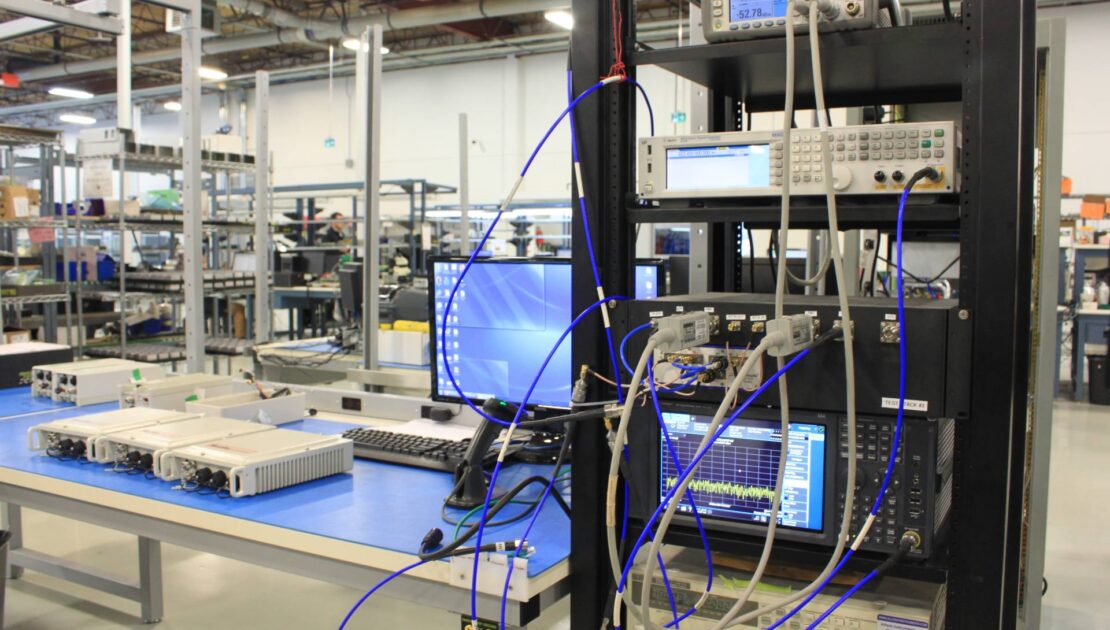
Your product can power on, do what it’s supposed to, and still have an electrical safety problem.
That is because a power-on check answers whether the device performs, not that it’s safe. Electrical safety issues are often tied to insulation and separation, and those details are easiest to miss once everything is installed and compressed into its final form.
A nicked wire, residue you can’t see, moisture, or spacing that is just a little too tight can create a leakage path that a basic power-on check won’t catch.
High potential testing, also known as HiPot testing, is a high-voltage test that focuses on that specific risk. It gives you a clear pass/fail signal on insulation and separation under electrical stress before the product ships.
In this guide, we’ll cover what HiPot testing is, how AC and DC approaches differ, what the results can and can’t tell you, and where it fits in the overall electronics testing process.
What is HiPot testing?
HiPot testing, also known as dielectric withstand testing, is an electrical safety check used to verify that electrical insulation and separation within a product are functioning properly.
Instead of asking whether the device functions in normal operation, HiPot testing asks whether conductive parts that should be isolated stay isolated when the assembly is put under electrical stress, preventing unintended current flow.
A HiPot test applies a high voltage between points that should remain electrically isolated, then monitors the result to determine whether insulation and separation held up within defined limits.
A pass means the insulation system withstood that stress. A fail suggests an unintended leakage path or insulation weakness, such as damage, contamination, moisture, stray wire strands, or spacing that becomes too tight once everything is installed in its final form. The exact setup, test duration, acceptance limits, and documentation requirements are defined in the test procedure tied to your product, rated voltage, safety standards, and compliance needs.
There are two common approaches to HiPot testing, involving direct current (DC) and alternating current (AC) voltage:
DC HiPot Test
DC test voltage is applied, then the insulation is monitored to assess its behavior under steady electrical stress. After an initial charge-up, the test focuses on leakage through the insulation system and whether it stays within the defined limit for the required duration.
DC methods are often chosen when the goal is a stable, easier-to-interpret leakage measurement, especially for certain assemblies where a changing field would introduce more “expected” current that is not actually an insulation failure.
AC HiPot Test
AC test voltage is applied, and insulation and separation are monitored as polarity alternates throughout the test. The changing polarity stresses insulation and separation in a way that often aligns with line-powered safety requirements or procedures that call for an AC withstand method.
Because the signal alternates, the measured current can include capacitive effects from the product’s design, which is normal and should be considered when defining limits. In other words, the total current measured during AC testing may include more than just leakage, and it may not represent purely real current through the insulation.
What Is a HiPot Tester?
A HiPot tester is the instrument used to run dielectric withstand testing in a controlled, repeatable way. It generates the required AC or DC test voltage, enforces a defined current limit for safety and consistency, and measures the resulting total current during the test so each unit can be evaluated against the procedure’s pass/fail criteria.
What Electrical HiPot Testing Proves (And What It Doesn’t)
HiPot testing is designed to answer a specific safety question about insulation and separation, not to validate every aspect of the product. Knowing what it can and cannot prove helps teams interpret results correctly and avoid treating one test as a substitute for a broader QA plan in the manufacturing process.
What HiPot Testing Can Tell You
- Whether insulation withstands electrical stress: A pass indicates the insulation system and separation barriers held up under the defined conditions without breakdown.
- Whether there may be an unintended leakage path: Failures can point to issues like damaged insulation, pinched wiring, contamination or residues, moisture, tolerance errors, or spacing and routing problems that only show up once the assembly is complete, including risks across adjacent pins or other contacts.
- Whether the finished assembly meets a defined withstand requirement: When the test procedure is tied to the product’s requirements, HiPot results provide clear evidence that the unit met the specified insulation and separation criteria at the time of test.
What HiPot Testing Cannot Tell You
- Whether the product functions correctly. A device can pass HiPot and still fail functional testing, calibration, or performance checks.
- Whether the product will be reliable long-term on its own. HiPot is a snapshot of insulation integrity under a specific stress condition. It does not replace environmental, lifecycle, or burn-in style evidence where those are needed.
- Whether every intermittent fault will be caught. Some problems are sensitive to movement, temperature, humidity, or timing and may not appear consistently unless the test setup is designed to provoke them. HiPot testing can help with some stress scenarios, but it is not a catch-all for every voltage transient event a product might experience in the field.
HiPot testing provides strong evidence for insulation and separation, but it does not replace the checks that prove the product is wired correctly and functions as intended. That is where other tests fill in the gaps HiPot is not meant to cover.
Electrical Safety Tests Commonly Used Alongside HiPot
HiPot testing is often grouped with other electrical safety checks that answer different questions. Understanding the difference helps you choose the right test evidence for your device and avoid treating one method as a substitute for another.
Insulation Resistance Test
Insulation resistance testing looks at how strongly insulation resists leakage by applying a DC voltage and measuring the resulting leakage or resistance. It is often used as a quick screen or troubleshooting tool for insulation quality. Compared with a dielectric strength test, insulation resistance is usually less about “stress the insulation to prove it holds” and more about “measure whether insulation looks healthy under a controlled condition.”
Ground Continuity Test
Ground continuity testing checks that the protective earth path is continuous from the ground connection to exposed conductive parts that must be bonded to earth. This test is only relevant for devices designed with protective earth, such as metal-enclosed, line-powered equipment, where the chassis is intended to be earthed.
For a class II product (double-insulated equipment with no protective earth), ground continuity is typically not part of the safety test plan in the same way, because the safety strategy is based on insulation rather than an earth bond.
Ground Bond Test
Ground bond testing goes a step further than ground continuity testing. It verifies that the protective earth bond is connected and robust enough to safely carry fault current. Like a ground continuity test, it applies to products that rely on protective earth as a safety measure.
HiPot testing focuses on insulation and separation. These related tests focus on insulation health and protective grounding. Together, they help build a clearer picture of electrical safety than any single test can provide.
Where HiPot Testing Fits in Our Testing and Inspection Process
August Electronics uses a layered testing and inspection process to ensure electronic assemblies meet the right standards at every stage of manufacturing. By catching issues early, we can address defects at a less expensive point in the build and reduce risk.
HiPot testing happens in our Testing stage, after earlier inspections have already confirmed workmanship and build consistency. Here is our process:
First-off inspection: We validate the first unit of a work order by evaluating SMT assembly, solder quality, and alignment against IPC standards, and issues are addressed before mass production begins.
Automated optical inspection (AOI): We use automated systems to catch defects early, including solder joint issues, component markings or misplacement, and polarity errors, so problems do not escalate downstream.
Post-SSM/wave inspection: We verify solder quality and component placement for through-hole assemblies, checking for flooding, bridging, and lead alignment.
Hand solder inspection: We confirm solder quality and polarity on manually soldered components, with a second assembler performing this step for unbiased verification.
Final inspection: We review overall product integrity, including mechanical assembly, conformal coating, and depanelization before delivery.
5% inspection: We evaluate a subset of boards both pre-test and post-test to confirm process consistency across SMT, through-hole soldering, and mechanical assembly.
Testing: We combine in-circuit testing (ICT), functional testing, and dielectric testing (HiPot) to verify functionality, safety, and overall performance under real-world conditions.
Post-test 5% inspection: We confirm conformal coating and any specific post-test requirements so boards are production-ready and meet expectations.
Placed this way, HiPot testing stays focused on what it is meant to prove: insulation and separation under electrical stress, supported by the inspections and tests that reduce avoidable workmanship-related surprises earlier in the build.
Build-Ready Testing, Backed by End-to-End Manufacturing
Testing is only one part of what makes a production build repeatable. You also need to factor in how procurement, assembly, inspection, and documentation work together so issues are caught early and you can be confident in the quality of the finished device.
If you are moving from prototype builds to consistent production, August Electronics can help you align your requirements to a practical manufacturing and test plan, then execute it with clear communication from start to finish.
Connect with us, share your build requirements and production goals, and we’ll help map the right path from assembly through testing and inspection for your device.