
Is a Networking Cable an Ethernet Cable? Fully Explained
Is a Networking Cable an Ethernet Cable? Fully Explained
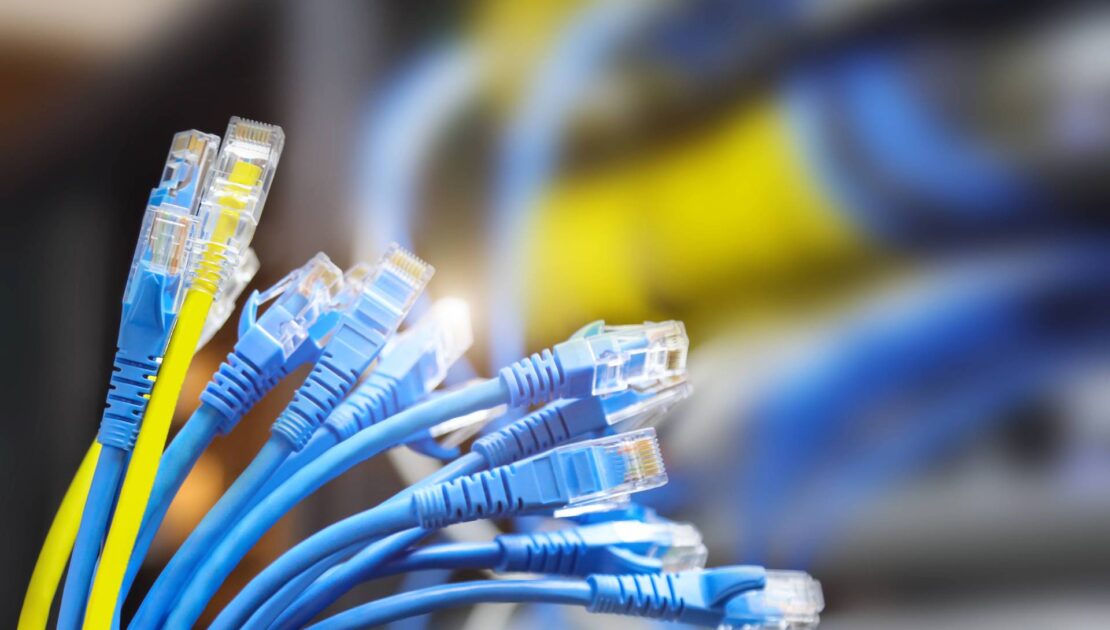
“Network cable” is one of those phrases that sneaks into a schematic or BOM and feels harmless… until someone on the line has to decide whether that means a Cat6 patch, a shielded industrial assembly, or a fiber jumper, and makes the wrong call. In a production environment, vague labels around cabling turn into real build issues very quickly.
A lot of that comes from treating “network cable” and “Ethernet cable” as if they are identical. When connecting network devices on a small office LAN, that shortcut usually works. Inside a product, control panel, or industrial system, it does not. Ethernet cables are one type of networking cable, sitting alongside fiber, coax, and serial or fieldbus cables that also connect devices and carry data.
This article looks at both sides of that relationship. You’ll learn the difference between Ethernet and network cables, and the different types and applications of each. The goal is simple: when you specify a cable, nobody should have to guess what you meant.
What is an Ethernet Cable?
An Ethernet cable is a twisted pair data cable that connects devices on a local area network, such as PCs, switches, and routers. It carries digital signals between ports and forms part of the wired network’s physical infrastructure, allowing the network to transmit data reliably instead of relying solely on wireless links.
All Ethernet cables are networking cables, but not all networking cables are Ethernet cables. Ethernet cables are designed specifically for Ethernet protocols that govern how frames move across copper links. Networking cables, on the other hand, also include fiber, coaxial, and serial or fieldbus cables that connect devices in different ways.
When people ask about “Ethernet cable vs network cable,” the key differences are whether the cable is built and rated for Ethernet or for some other method of data transmission.
Electrically, standard Ethernet cables use four twisted pairs of copper wiring inside a single jacket. The way those pairs are arranged and tested is defined by cable categories such as Cat5e, Cat6, and Cat6a. Each category supports different speeds, distances, and levels of noise immunity.
Here are the most common categories of Ethernet cables:
Cat5e
Cat5e is the baseline for most existing copper Ethernet installs. It uses four twisted pairs to support up to 1 Gbps over runs up to 100 metres in typical office environments. It is still common in older premise wiring and for low to moderate bandwidth needs, but many new projects are moving beyond Cat5e to gain more margin and future-proof their networks.
Cat6
Cat6 improves on Cat5e with tighter control of crosstalk and higher bandwidth. It is rated for 1 Gbps up to 100 meters, and can support 10 Gbps over shorter distances under favorable conditions. For many small networks and equipment rooms, Cat6 is now the default choice because it adds performance headroom without a major change in handling or connector style.
Cat6e
Cat6e (often called “enhanced Cat6”) builds on Cat6 performance with improved construction and noise control, giving more margin for higher-speed links and electrically noisy environments. It is still used with standard RJ45 terminations, so it fits into familiar Ethernet networks and patch panels. In practice, Cat6e is often selected where Cat6 is technically sufficient, but extra performance and shielding are desirable for reliability.
Cat6a
Cat6a high-speed Ethernet cables are designed for improved bandwidth capabilities, providing consistent 10 Gbps Ethernet connections over the full 100m channel. It uses larger conductors, improves separation between pairs, and has a more robust construction to control noise at higher frequencies. The trade-off is evident in its physical characteristics—Cat6a is a thicker, heavier cable that requires more planning for routing and bend radius, but it is a common choice in new builds where long-term capacity is crucial.
Cat7
Cat7 cables push bandwidth and noise control further, typically using individually shielded pairs plus an overall shield. They are designed for high-frequency applications and environments where electromagnetic interference is a concern. Cat7 is less common than Cat6a in general premise wiring, but it is used in specific projects where additional shielding and headroom are needed, and the extra size and stiffness can be accommodated.
What is a Networking Cable?
Network cables encompass a wider category of physical cables used to connect devices in a network and carry data between them. That can mean unshielded twisted pair copper in office local area network setups, fiber links between data centre racks, or ruggedised serial cabling inside an industrial control panel.
When you write “networking cable” in documentation, you might be referring to an Ethernet patch cable, a fiber jumper, or a serial cable between a controller and a field device. If that is not spelled out, it could lead to disaster down the line.
In practical projects, you will usually encounter a handful of networking cable families. They differ in how they move data, how far they can go, and how well they tolerate noise, harsh environments, or external interference.
Here are the most common networking cable families:
Fiber optic cables
Fiber optic cables use glass or plastic fibers instead of copper conductors. They transmit light rather than electrical signals, which allows very high bandwidth over longer distances with strong immunity to electrical noise. You will often see fiber used for high-speed data transfer links between buildings, between racks in data centers, or anywhere LAN connections would be too long or exposed to too much interference.
Coaxial cables
Coaxial cables have a central conductor, an insulating layer, shielding features, and an outer jacket arranged around a common axis. They are still widely used for broadband internet, RF signals, and some legacy networking systems. In mixed environments, coax may sit alongside Ethernet and fiber to carry specific signals where its shielding and impedance characteristics are a good fit.
Serial and industrial cables
Serial and industrial networking cables carry data for protocols such as RS-485, CAN, and various fieldbus systems. These cables are often built with specific shielding, jackets, and conductor layouts tailored to industrial settings and control panels. They may not look like other network cables, but they are still part of the same physical infrastructure that lets devices exchange data and keep a networked system running.
Twisted pair copper Ethernet cables
As discussed above, twisted pair copper is the default cabling for most wired Ethernet networks. It uses pairs of copper conductors twisted together to reduce electromagnetic interference and carry data between switches, routers, and end devices. Categories like Cat5e, Cat6, and Cat6a define the bandwidth and distance a given cable can support in a typical local network.
Which Networking Cable Should You Choose for Your Project
In a manufactured product, you are not choosing cabling for an entire building. You are choosing the right networking cable for specific links inside an enclosure, control panel, rack, or piece of equipment. The same design might need a short Ethernet jump between boards, a harness up to a front panel, and a serial link out to a sensor or actuator.
The first question is what the electronics actually require. If your design uses Ethernet, the decision typically falls between different categories and constructions of twisted pair cable, including Cat5e, Cat6, or Cat6a, as well as whether the cable is unshielded or shielded, the type of jacket, and how the cable will be terminated.
If the interface is fiber or an industrial protocol like RS-485 or CAN, the decision shifts to fiber types or industrial cable constructions that can handle the environment where the equipment will operate.
Most teams should consider:
- Electrical performance: Does the cable support the speed, distance, and signal integrity required by your interface?
- Environment and use case: Will the assembly be subjected to vibration, flexing, exposure to oil or chemicals, elevated temperatures, or tight bend radii?
- Mechanical integration: How does the cable route through the product? How is strain-relieved? How easy is it to assemble and service?
- Compliance and ratings: Are there flame ratings, voltage ratings, or any industry-specific requirements the finished product must satisfy?
Once those questions are answered, it should be clear whether you need a standard Ethernet construction, a more robust shielded version, or a different class of networking cable altogether for that part of the system.
How August Helps You Get The Right Networking Cable Assembly
You do not have to become an expert in all cable types to get a reliable result. In most cases, what matters is describing how your network needs to behave inside the product and what constraints the enclosure, panel, or rack introduces. August can take that information and translate it into concrete cable and connector choices that match your electrical, mechanical, and compliance requirements.
From there, the team defines lengths, breakouts, strain relief, and terminations to ensure each assembly fits your layout and is straightforward to integrate and service. Clear, consistent labels on harnesses and connectors make it much easier for your team to route cables correctly during final assembly and to identify the right conductors quickly during troubleshooting or field repairs.
Cable assemblies are then built and verified as part of the same controlled process that supports August’s PCB assembly, box build, and testing work. Checks such as continuity, wiring verification, and visual inspection are built into the flow so cable issues are caught before final system assembly.
If you are preparing a product for repeatable manufacturing and want clearer answers on cabling, August can help you lock in the right networking cable assemblies as part of your overall system. Contact August Electronics to discuss how your next product should be wired and built.