
What is Electronics Manufacturing? (& How to Choose an Electronics Manufacturing Services Partner)
What is Electronics Manufacturing? (& How to Choose an Electronics Manufacturing Services Partner)
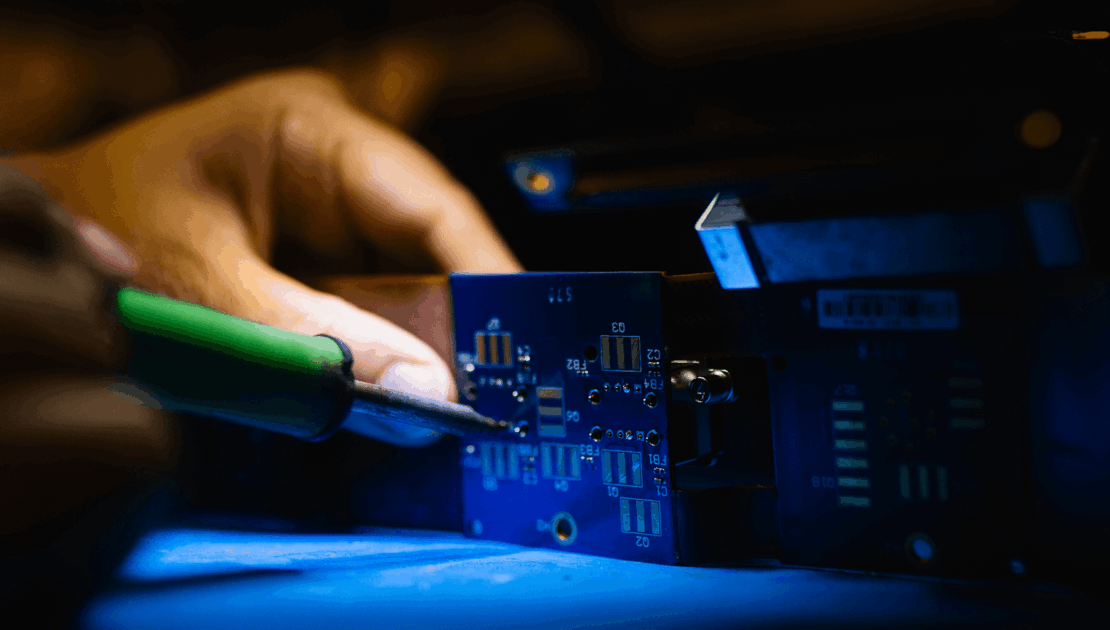
You have a working design for an electronic device. Now you need a way to build it the same way every time.
Electronics manufacturing is the process that will get you there. Use this article to understand the process and to evaluate electronics contract manufacturing partners with the right questions.
What is Electronics Manufacturing?
Electronics manufacturing is the end-to-end process that turns an engineered design into a reliable, shippable product by linking design readiness, sourcing, assembly, and verification within a documented quality system.
In practice, that means preparing the design for build, keeping raw materials flowing in a tight supply market, assembling to spec, and proving performance before it leaves the floor. The right electronics manufacturing services (EMS) partner makes those steps predictable so your team can meet deadlines, protect quality, and support the product over its life.
What is an Electronics Manufacturing Services (EMS) Provider?
An EMS provider turns a finished design into consistent output. Skilled engineers prepare the build, source and verify parts, assemble boards and systems, verify performance, and deliver finished product with the records your electronic devices need to meet compliance and quality standards. The aim is dependable electronic product manufacturing with fewer surprises, predictable schedules, clear traceability, and ongoing cost reduction that does not compromise product quality.
Core EMS Capabilities
While EMS companies vary in their production capabilities, these core competencies should remain consistent across the electronics manufacturing industry.
Design for Manufacturing (DFM)
Design for manufacturing is the upfront review that makes a design practical to build, inspect, and test. It focuses on things like component choices, spacing and clearances, panelization, test access, labeling, and documentation, so production issues are resolved before they appear on the line.
Supply Chain Management
Supply chain management is the coordinated work of validating the bill of materials (BOM), selecting qualified sources, managing lead times, and tracking part lifecycle. It also includes screening to avoid the risk of counterfeit electronic components, active obsolescence management, and planning alternatives to keep builds moving when the global market shifts.
PCB Assembly
The PCB assembly process involves the controlled assembly of printed circuit boards using surface-mount technology, through-hole technology, or a combination of both. It relies on verified solder profiles, documented work instructions, and in-process checks to ensure printed circuit board assemblies meet specifications. Effective control here supports downstream final assembly and helps safeguard your brand’s reputation.
Box Build Assembly
Box build assembly is the system-level integration process where boards, cables, and mechanical parts are combined into a finished unit. Typical tasks include enclosure prep, fasteners and adhesives, thermal interfaces, firmware load, labeling, and end-of-line checks.
Cable Assembly and Wiring
Cable assembly and wiring involve the fabrication of custom cables, harnesses, and panel wiring that meet the product’s electrical and mechanical requirements. Conductors are cut, terminated, labeled, routed, strain-relieved, and tested for continuity and polarity.
Inspection and Testing
Inspection and testing verify solder quality and function before release. Methods commonly include SPI and AOI for placement and paste, X-ray for hidden joints, in-circuit test for structural faults, functional testing for performance, and safety checks where required.
Outbound Logistics
Outbound logistics encompasses the packaging, labeling, documentation, and shipment planning that facilitate the movement of finished goods to their destinations. Programs may include direct-to-customer fulfillment, bulk or staggered deliveries, and export paperwork for international shipments.
Inventory Management
Inventory management is the controlled storage and release of materials and finished goods. It can include safety stock, bonded inventory, kitting, and cycle counts, so production aligns with demand without excess carrying cost.
Repair and Refurbishment
Repair and refurbishment is the structured process of diagnosing returns, replacing or reworking parts, and re-testing to the same standards as new builds. The goal is to restore function, document findings, and reduce future field issues.
Together, these capabilities convert a finished design into reliable output by aligning build readiness, materials flow, controlled assembly, and objective verification. The result is predictable schedules, clear traceability, and products that meet specifications at scale.
The Electronics Manufacturing Services Lifecycle
An end-to-end EMS partner keeps work moving in one connected flow. Design readiness informs sourcing. Sourcing informs the build. The build feeds objective testing and documentation. With one partner throughout the lifecycle, handoffs are cleaner, risks surface earlier, and output is easier to scale.
Innovate & Design Support (DFM, DFT, DFI)
Upfront reviews bake manufacturability, test coverage, and inspection readiness into the product. In practice, this means applying DFM to simplify builds and reduce manual steps, DFT to ensure access and coverage for reliable testing, and DFI to ensure that drawings, labels, and visuals align with how the line will inspect and verify. Typical checks include PCB layout details, such as trace widths, solder mask clearances, and pad spacing, so issues are resolved before they reach production, improving cost-effectiveness at scale.
Plan, Procure & Prototype
This phase validates the BOM and locks a plan that ensures materials can support it. Teams model lead times, qualify alternates, and secure long-lead items, while pilot builds confirm placement data, tooling, work instructions, and the test plan that will be used later at volume. The objective is to connect procurement work with real builds, ensuring schedules remain credible as you scale.
Build & Manufacture
Boards are placed and soldered using controlled profiles with in-process checks for paste, placement, and hidden joints. Completed boards are integrated with cables, wiring, and mechanicals into finished units, including enclosure prep, thermal interfaces, firmware load, labeling, and system validation, so products leave the production line ready for use or integration.
QA/QC, Inspection & Testing
Rigorous testing services ensure each unit meets client and industry standards. Standard coverage includes solder paste inspection, automated optical inspection, X-ray for hidden joints, in-circuit testing for structural faults, functional testing for performance, and dielectric safety checks when required. Results are captured under the quality system for traceability and release.
Delivery (Packaging, Documentation, Shipping)
Finished goods are packaged in ESD-safe materials, labeled to destination requirements, and shipped with the correct records. Programs can support direct-to-customer fulfillment, bulk or staged deliveries, and export paperwork, such as commercial invoices and regulatory documentation, ensuring products move without delays.
Manage & Repair (Sustainment, Returns, Refurb)
After shipment, inventory is balanced to demand, and returns are diagnosed, repaired, and retested to the same standards as new builds. Refurbishment programs restore performance to meet regulatory and customer requirements and feed lessons back into design and process for the next run.
Common Risks and How an Electronic Manufacturing Partner Mitigates Them
After launch, the risks shift to the field. Traceability gaps can slow investigations, counterfeit parts can slip in during replacements, compliance can drift as revisions stack up, and isolated failures can repeat if lessons are not captured.
A mature EMS counters this with serialized records that travel with each unit, qualified suppliers and incoming inspection for service parts, periodic audits against the quality plan, and a closed-loop RMA process where root causes drive documented corrective actions.
The result is faster resolution, fewer repeat issues, and sustained product performance over time.
Industries That Benefit From Electronics Manufacturing Services
An EMS partner adapts the same core disciplines to very different operating realities:
Regulated Teams
- Documentation
- Traceability
- Validated test evidence
Harsh Environments
- Materials selection
- Sealing
- Ingress protection
- Thermal reliability
High-Volume Consumer Electronics
- Repeatability
- Yield
- Unit cost control
Startups
- Flexible capacity
- Fast NPI guidance
- Clear change control
Enterprise Programs
- Predictable output
- Standardized reporting across sites and time
Here are common industries that benefit from partnering with electronics contract manufacturers:
- Oil and Gas
- Internet of Things (IoT)
- Communications and Networking
- Power and Renewable Energy
- Lighting and Electrical
- Industrial
- Transportation
- Agriculture
- Instrumentation
- Automotive
- Health and Wellness
- Mechanical
- Start-Ups
- Aerospace and Defense
- Medical
- Consumer Electronics
- Marine
Manufacturing systems, whether producing straightforward or advanced technology, should always meet the evidence, reliability, and cost targets for the environment in which the product will be used.
What to Look for in an Electronics Manufacturing Services Partner
Selecting an electronic manufacturer as a partner sets the tone for your entire program. Original equipment manufacturers should look for a team that can turn your design into a predictable output, with proven process control, relevant industry experience, end-to-end capability, and clear communication when plans change.
The best electronics manufacturers combine disciplined operations with a working cadence that matches how your team builds and ships. Use the criteria below to test alignment on process, risk, and day-to-day execution.
Expertise
Look for teams that understand your product class and environment. Industry experience shapes practical DFM feedback, realistic lead-time planning, and a test strategy that fits your risk profile. Ask for examples that map to your use case, not just a generic capability list.
Quality
A good manufacturer makes quality measurable. Expect written procedures, controlled work instructions, and clear acceptance criteria. Request sample records that show how defects are classified, contained, and corrected, and how data is used to improve future runs.
End-To-End Capabilities
Programs move faster when one owner connects design readiness, sourcing, assembly, test, and delivery. Confirm they can support your full lifecycle, including documentation, packaging and labeling, inventory options, and service or repair after shipment.
Certifications
Certifications signal discipline and shorten audits. Verify the ones relevant to your sector and ask how they are maintained. Alongside formal certificates, confirm practical items like IPC workmanship training, ESD control, materials handling, and traceability.
Communication
Most delays are communication problems. Look for clear points of contact, timely status updates, and issue escalation that lead to action. Agree on formats for schedules, build reports, and test summaries so everyone sees the same information at the right time.
Volume & Mix Fit
High-mix and low-volume programs carry many SKUs, frequent revisions, and modest batch sizes. Ask how the EMS balances changeovers with throughput, manages ECOs without schedule drift, and keeps test coverage consistent as variants evolve.
Questions to Ask Before You Commit
Here are practical due diligence prompts to test fit before you sign. Use them to confirm the maturity of the EMS’s manufacturing processes, test strategy, traceability, and supply-chain resilience.
- How do you manage NPI, and what are the key milestones from quote to release?
- What is your ECO and revision-control process, and who signs off at each step?
- How do you approach test strategy?
- How do you manage component obsolescence and mitigate counterfeit risk?
- How will we see schedule health (cadence, format, and escalation path)?
- What should we expect during a first-article build?
- Which quality metrics matter most to your team?
- How are nonconformances and CARs tracked, resolved, and communicated?
Why OEMs Choose August Electronics
August pairs end-to-end electronic manufacturing services (EMS) with specialized equipment and the electronics industry expertise required to move from concept to sustained production.
Our Calgary manufacturing facility brings DFM and NPI support together with sourcing, PCB assembly, cable and wiring, box build, and layered inspection and testing, all under documented quality systems. Certifications include ISO 9001 and ISO 13485, with IPC-trained staff and experience building to CSA, UL, and ETL requirements. For regulated and harsh-environment programs, we maintain the evidence and traceability customers expect, from materials handling and ESD control to records that travel with the product.
Customers also choose August’s EMS manufacturing for practical things that keep schedules on track. We manage alternates and long-lead parts, package and label for domestic or international delivery, and support post-shipment needs like inventory programs, repair, and refurbishment. Communication stays clear and direct, so issues surface early and decisions are made with the right information in hand.
Ready to see how this would work for your product? Start a conversation with our team, and we will review your design package, discuss goals and constraints, and outline a build plan that fits your timeline.